Many businesses proudly display their ISO certificate, believing it will help them win new contracts, especially with the UK Government, defence, and the MOD. Unfortunately, not every certificate does what people think it does. If your ISO certificate isn’t UKAS-accredited, it may not be recognised at all.
That’s the focus of this conversation between Simon Batchelar and Paul Everington. In this video, we explore the difference between an ISO certification that will open doors and a certificate that might leave you with a false sense of security.
Why businesses choose ISO certification
ISO 9001 is often seen as a signifier of quality and trustworthiness. It’s a way to demonstrate that your business has clear processes, consistency, and a commitment to improvement. Many companies seek certification to strengthen their credibility with new clients, particularly when bidding for high-value contracts in regulated industries.
But here’s the catch: not all certificates are created equal.
What is UKAS accreditation?
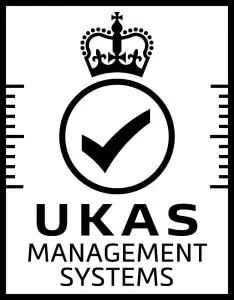
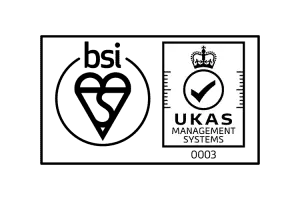
In the UK, certification must be issued by a body accredited by UKAS, the United Kingdom Accreditation Service. UKAS is the government-appointed organisation that ensures certification bodies meet strict standards.
It's easy to identify, just look for the UKAS logo (shown opposite). Each approved issuer will have a unique 4-digit number under this logo, which you can verify on the UKAS website. In this example, the issuer is BSI, and their number is 0003.
Without UKAS accreditation, your ISO certificate may not be recognised by government departments, defence contracts, or large corporate buyers. On paper, you might think you are certified, but when it comes to tendering, your certificate won’t carry the weight you expect.
Spotting the problem
There are organisations that offer ISO certificates at a lower cost or with fewer checks. These might seem attractive at first, they are often faster, cheaper, and simpler. But if the certificate is not backed by UKAS, it won’t deliver the credibility you need.
In the video, Paul explains how to identify whether your certificate is accredited and what to look out for on the paperwork. This simple check could save your business from wasted time and money.
Now is the time to check
If you already have an ISO certificate, now is the time to review it. Check whether it is UKAS-accredited. If it isn’t, you can talk to Paul about getting the right certifications in place for your business needs.
Getting it right isn’t just about compliance. It’s about ensuring your business has the credibility and assurance needed to compete for government and defence contracts.
Read the video transcript
Simon Batchelar: Hello everybody and welcome to this video where we'll be explaining why you should check your ISO certificate because it might not hold the key to the door for more work that you thought it might do.
My name is Simon Batchelar, I'm a marketing consultant from Pallant Studio, and we work predominantly with engineering and manufacturing companies to help them with their marketing and help them make connections and get leads from outside of their immediate network. I'm joined today by Paul. So Paul, do you wanna give us a quick intro?
Paul Everington: Hi. Yeah. I'm Paul Everington from Everwell Associates and we support companies with their quality processes. We work across small and medium sized companies, also specialising in the same areas as you manufacturing and production.
Simon Batchelar: Excellent. So recently we've had a couple of people come to us who have said, oh, they're very proud with their new ISO certification, and we've been adding their certificates to the bottom of the website.
Now in relation to getting work with, let's say the UK government or any of the defence sector or potentially any of the aerospace sector here in the UK, there is a very specific requirement for your ISO certificate and I wasn't aware of this. I wanted to make this video to help highlight a really simple identification mark, that some companies might be missing they're getting what they think is an ISO certification. I've waffled on enough about this mystery Paul, can you put us out of our misery? How do we tell whether we've got a ISO certificate in our hands?
Paul Everington: If you want to get the formal certification. And the wording is, is important here. Certification to ISO 9001, it has to be done by an appropriate body.
Now internationally, there's a group called ILAC and they govern worldwide the accreditation bodies. Okay? Now, in the UK there's only one accreditation body it's appointed by the government it's called UKAS U K A S not to be confused with the, the university one, and they accredit all relevant companies.
Now, when it comes to ISO 9001, it's a reasonably straightforward system. So they accredit various companies like BSI and other well-known names so they can come in and certify you. So if you get a certificate saying you are certified ISO 9001 it must have one thing at the bottom of it. It's a little logo with UKAS on it.
And it will have a number under that. And that number references their company. So that is your absolute traceability that says that BSI, or whoever you get as a properly accredited company are accredited to certify you. Now if you don't have such certificate with that UKAS logo on the bottom, you cannot bid on MOD, government contracts if you are not UKAS certified.
Simon Batchelar: And I think the important thing here is Paul's brought to my attention, a number of companies that are "certifying" to ISO 9001, and I had noticed this on a couple of our client websites, in fact, where the company that had certified this ISO 9001 had done so to a recognised level of basically saying, well, you've met all of the standards for ISO, but the problem is they're not doing so as an accredited body. Am I correct in that understanding?
Paul Everington: That's absolutely right. they themselves are not a accredited body, so they can, you know, like I could, could say, yeah, you're doing some good things, but they cannot issue with that formal certification to ISO 9001.
Simon Batchelar: So essentially what they've given us is like a sports day certificate saying, well
Paul Everington: Yes.
Simon Batchelar: For
Paul Everington: Good example.
Simon Batchelar: We've all had a lovely day out, but this is essentially just a sports day. Well done.
Paul Everington: Yes. Yeah,
Simon Batchelar: It's not been accredited by UKAS, it doesn't pass muster. And the thing is, is when you
Paul Everington: Upload
Simon Batchelar: It
Paul Everington: Yeah,
Simon Batchelar: Saying, yes, I'm compliant, they'll say, well, that's fine, but we need a UKAS certificate, and you haven't got a UKAS certificate, you've just got a Sports day certificate.
Paul Everington: Correct.
Simon Batchelar: That's gonna be where the problem arises.
Paul Everington: Exactly. Yeah. No, you summarised it very well.
Simon Batchelar: So Paul, if someone is loading up their website right now, scrolling to their ISO certificate and they've realised that they are
Paul Everington: Yes.
Simon Batchelar: Missing the UKAS logo, would you recommend the next steps would be?
Paul Everington: Well, I mean, get in touch with us and we can point you to it. You can go to the UKAS website and you can see if that company that appeared to give you certification is a genuine entity. As I said, the first clue is if their certificate has the UKAS logo, probably are you can check their certificate on the UKAS website. If they've not got that logo, they definitely are not. So, you know, just make sure you check and if you need a hand on that just to get in contact with me and I'll, point you in the right direction.
Simon Batchelar: Excellent. Yeah, that definitely sounds like something that I recommend people do. So do get in touch with Paul who can make sure that all of your ISO certifications are up to scratch and they going to pass muster when inspected. So Paul, how can people get in touch with you if they do want to talk ISO certification?
Paul Everington: They can go to our website, Everwell Associates, or just get in touch with me on LinkedIn at Paul Everington.
Simon Batchelar: Thanks very much Paul, and thanks everybody for listening and watching, and we'll see you next time