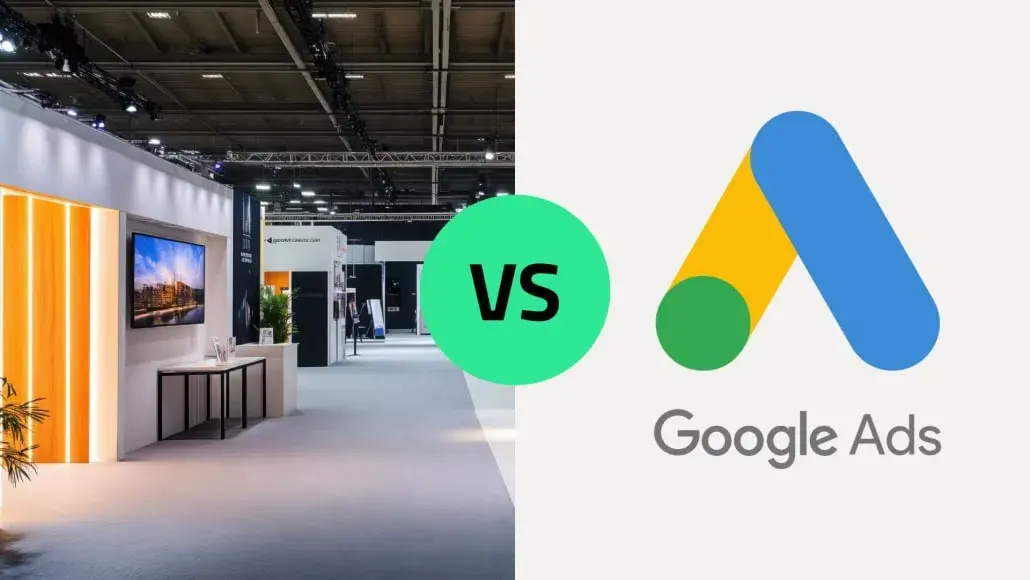
When you want to generate new business, is it better to have a stand at a trade show or put your budget into Google Ads? Both approaches can work, but they deliver results in different ways. By comparing their strengths and weaknesses side by side, you’ll get a clearer idea of which approach will best generate the leads you need to grow your business.
Building awareness vs targeting intent
Having a stand at a relevant trade show puts your brand in front of a relevant audience. Simply being seen at the right event adds credibility and positions you as an active player in your sector. Trade shows also give you the chance to meet prospects face-to-face, answer their questions, and demonstrate your expertise in person.
Google Ads, by contrast, reach people at the very moment they are searching for a solution. Instead of waiting for potential clients to walk past your stand, your ads appear when they are actively researching options. This means your message is more likely to connect with people who already have buying intent.
Networking vs scalability
Trade shows often deliver more than sales leads. They are networking hubs where you can meet suppliers, partners, and future employees. The conversations you have can strengthen relationships and open up opportunities beyond immediate sales.
Google Ads, however, offer something a trade show cannot: scalability. Campaigns can be run across a city, a country, or globally. For the cost of a trade show stand, you can reach hundreds of thousands of prospective leads at the moment they're looking to buy. You can also set budgets, control spend, and track every click, giving you measurable results and the ability to refine campaigns quickly.
This is how we generate around 15 leads a month for Carbon Fibre Tubes.
Tangible experience vs flexibility
A trade show allows prospects to see, touch, or experience your product in a way digital ads cannot. For complex or high-value solutions, this hands-on experience can be a powerful way to build trust.
With Google Ads, the advantage lies in flexibility. You can test different messages, boost specific campaigns, and refine targeting almost instantly. If something isn’t working, you can adjust in hours, not weeks. Once your trade show stand is built and booked, changes are much harder.
High costs vs competitive bidding
Trade show stands can be very expensive. The cost of stand space, build, travel, accommodation, and staff time quickly adds up. It’s a major investment, particularly for smaller businesses. This can sometimes result in wasted budget if the show mainly attracts other salespeople or people looking for a job.
Google Ads also come with costs, though in a different form. In competitive industries, keyword bids can escalate, and maintaining visibility requires ongoing investment. Although Google Ads stop working the moment you stop paying, they can also be scaled down or paused when you're at capacity and reactivated very quickly when you need more leads again, without waiting for another trade show date.
Limited reach vs ad blindness
Trade shows are tied to a single location and time. Your reach is limited to those who attend that specific event, which may mean a hall full of competitors, salespeople and job seekers rather than new clients.
Google Ads are not limited by geography or date. However, digital audiences are increasingly wary of ads, with many skipping past paid listings to click organic search results instead. Ad blindness can reduce effectiveness, even if your targeting is precise. Although AI overviews are changing the way people experience Ads.
Finding the right balance
These approaches don’t need to be in opposition. They can work together. A trade show might raise awareness, with Google Ads ensuring prospects find you again when they later search online. Equally, retargeting ads can keep your brand visible after someone has stopped at your stand.
If your goal is to build trust and reputation in your sector, trade shows deliver strong visibility. If you need measurable, scalable lead generation, Google Ads are more efficient. Many successful businesses use both, striking a balance between in-person credibility and online visibility.
Whichever way you lean, both work harder inside a clear plan. Our 3-step marketing process makes sure your website is ready to convert before you spend on ads or stands, then uses your network and paid ads to reach buyers at the right moment.
Read the video transcript
When you want to generate new business, is it better to have a standard, a trade show or put your budget into Google Ads? Both these approaches can work and they deliver results in different ways.
In this video, I'll compare their strengths and their weaknesses side by side so that you can get a clearer idea of which approach will work best to generate the leads that you need to grow your business.
Building awareness vs targeting intent.
Having a stand, a relevant trade show puts your brand in front of a relevant audience. Simply being seen at the right event adds credibility and it positions you as being an active player in that sector.
Trade shows also give you a chance to meet prospects face to face, answer their questions and demonstrate your expertise in person.
Google Ads by contrast, reach people at the very moment that they're searching for a solution. So instead of waiting for potential clients to walk past your stand, your Ads appear when they're actively researching their options.
This means that your message is more likely to connect with the people who already have buying intent.
Networking vs scalability. Trade shows often deliver more than just sales leads. Their networking hubs where you can meet suppliers, partners, and even future employees.
The conversations you have can strengthen relationships and open up opportunities beyond immediate sales.
Google Ads, however, offers something that a trade show cannot, and that's scalability. Campaigns can be run across a city, a country, or even globally.
For the cost of a trade show stand, you can reach hundreds of thousands of perspective leads right at the moment that they're looking to buy.
You can also set budgets, control, spend, and track every click, giving you measurable results and the ability to refine campaigns quickly.
Tangible experience vs flexibility. A trade show allows prospects to see, touch, or experience your product in a way that digital Ads cannot. For a complex or high value solutions, this hands-on experience can be a powerful way to build trust.
With Google Ads the advantage lies in flexibility. You can test different messages, boost specific campaigns, and refine targeting almost instantly. If something isn't working, you can adjust it in hours, not weeks.
Once your trade show stand is built and booked, changes are much harder.
High costs vs competitive bidding. Trade show stands can be very expensive. The cost of a stand, space, build, travel, accommodation, and staff time quickly add up. It's a major investment, particularly for a smaller business. This can sometimes result in wasted budget if the show mainly attracts other salespeople or just lots of people who are looking for a job.
Google Ads also comes with costs just in a different form. In competitive industries, keyword bids can escalate, and maintaining visibility does require ongoing investment. Although Google Ads do stop working, the moment you stop paying, they can also be scaled up, down, or paused when you are at capacity and they can be reactivated quickly when you need more leads again, without having to wait for another trade show. Limited reach vs ad blindness. Trade shows are tied to a single location and time, your reach is limited to those who attend that specific event, which may mean a hall full of competitors, salespeoples, and job seekers, rather than new clients.
Google Ads are not limited by geography or date. However, digital audiences are increasingly wary of Ads with many skipping past paid links to get to those organic results instead.
Ad blindness can reduce effectiveness even if your targeting is precise.
Although AI overviews are changing the way that people experience Ads.
Finding the right balance. These approaches don't need to be in opposition, they can work together. A trade show is a great way of raising awareness, and you can then use Google Ads to ensure prospects find you again when they later search for you online.
Equally, retargeting Ads can keep your brand visible after someone has stopped at your stand.
If your goal is to build trust and reputation in your sector, trade shows deliver strong visibility. If you need measurable, scalable lead generation, then Google Ads are more efficient.
Many successful businesses use both striking a balance between in-person credibility and online visibility.
If you'd like to learn more about how we can help you get visible and attract clients even after they've been to your trade show stand, then visit our website, pallant.studio.
I'll see you in the next video.